









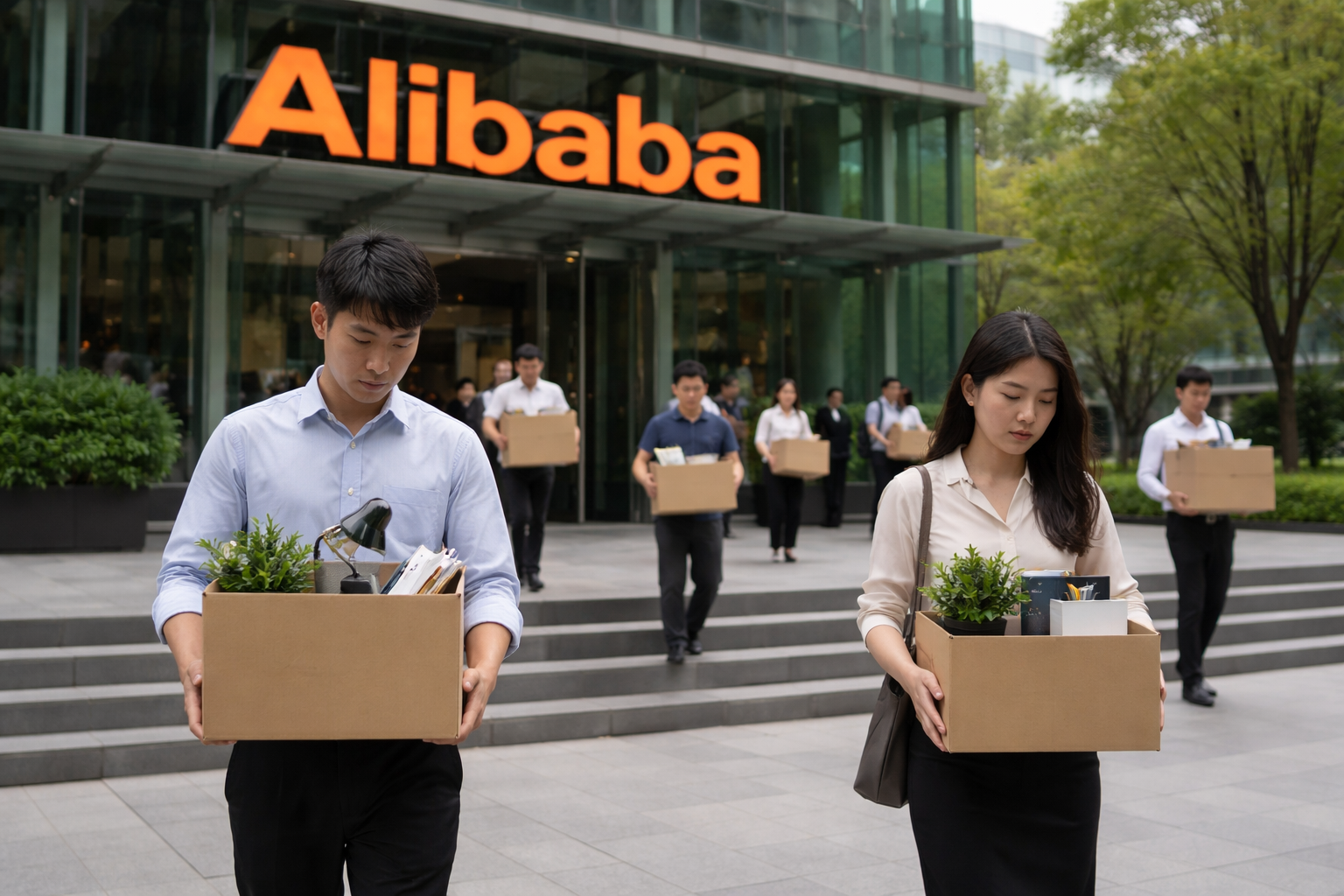
Alibaba has sharply reduced its workforce as it restructures its business and intensifies its focus on artificial intelligence.
The Chinese e-commerce and technology group ended December with 128,197 employees, down from 194,320 a year earlier, marking a decline of about 34% year over year.
The update came alongside its latest earnings report released Thursday, which showed a steep drop in profit and revenue that missed market expectations for the final quarter of last year.
Shares listed in Hong Kong fell 6% on Friday following the results, reflecting investor reaction to both the financial performance and the ongoing transition.
Retail exit drives cuts
A large portion of the workforce reduction followed Alibaba’s exit from its offline retail businesses.
The company sold its stake in Sun Art Retail Group at the end of 2024 and also exited its investment in department store chain Intime around the same time.
These moves reduced the need for employees tied to physical retail operations.
Alibaba has historically operated a broad ecosystem that includes e-commerce platforms, logistics networks, and cloud services.
The recent changes show a shift away from labour-intensive segments and towards areas that require less physical infrastructure.
The scale of the cuts is significantly larger than previous adjustments.
In December 2024, Alibaba had already reduced its workforce by 11% compared with the prior year, indicating that the latest decline reflects a faster restructuring phase.
Earnings miss weighs on shares
The workforce update came as part of Alibaba’s quarterly earnings disclosure.
The results showed profit plunging 67% for the period, while revenue came in below analyst expectations.
Investors responded quickly to the weaker performance, pushing the company’s Hong Kong-listed shares down by 6% on Friday.
The figures underline the pressure Alibaba faces as it reshapes its business while navigating slower growth in some of its traditional segments.
Alibaba remains China’s second-largest technology company by market capitalisation.
It is also part of a broader trend, with major technology firms globally reducing headcounts over the past year as they adjust to shifting economic conditions and evolving investment priorities.
AI strategy gains pace
The company is repositioning itself around artificial intelligence as a core growth driver.
Alibaba is working towards building a full-stack AI ecosystem that spans semiconductor development, computing infrastructure, and AI models.
As part of this strategy, the company launched an agentic AI service called Wukong for enterprise users this week.
It has also raised prices for its cloud and storage services by as much as 34%, citing strong demand and rising supply chain costs.
The focus on AI aligns with wider industry developments, as technology companies invest heavily in tools and infrastructure designed to support machine learning and automation.
Cloud ambitions shape future plans
Alibaba’s leadership has outlined ambitious targets for its cloud and AI divisions.
During the earnings call on Thursday, CEO Eddie Wu said the company aims to grow its cloud and AI revenue to more than $100 billion annually within the next five years.
This goal highlights a long-term shift towards high-margin technology services and away from businesses linked to physical retail.
The transition requires continued investment and organisational changes as Alibaba adapts to a more technology-driven growth model.
The post Inside Alibaba’s reset: 34% job cuts, profit shock, and AI gamble appeared first on Invezz