





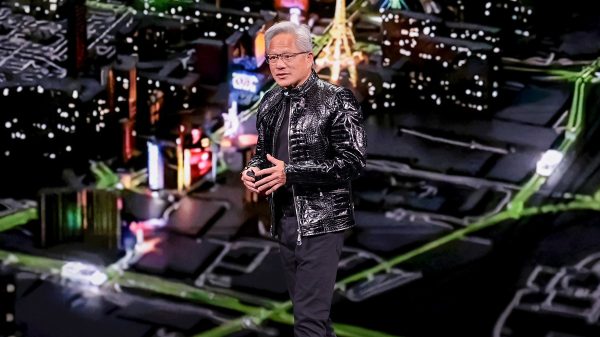




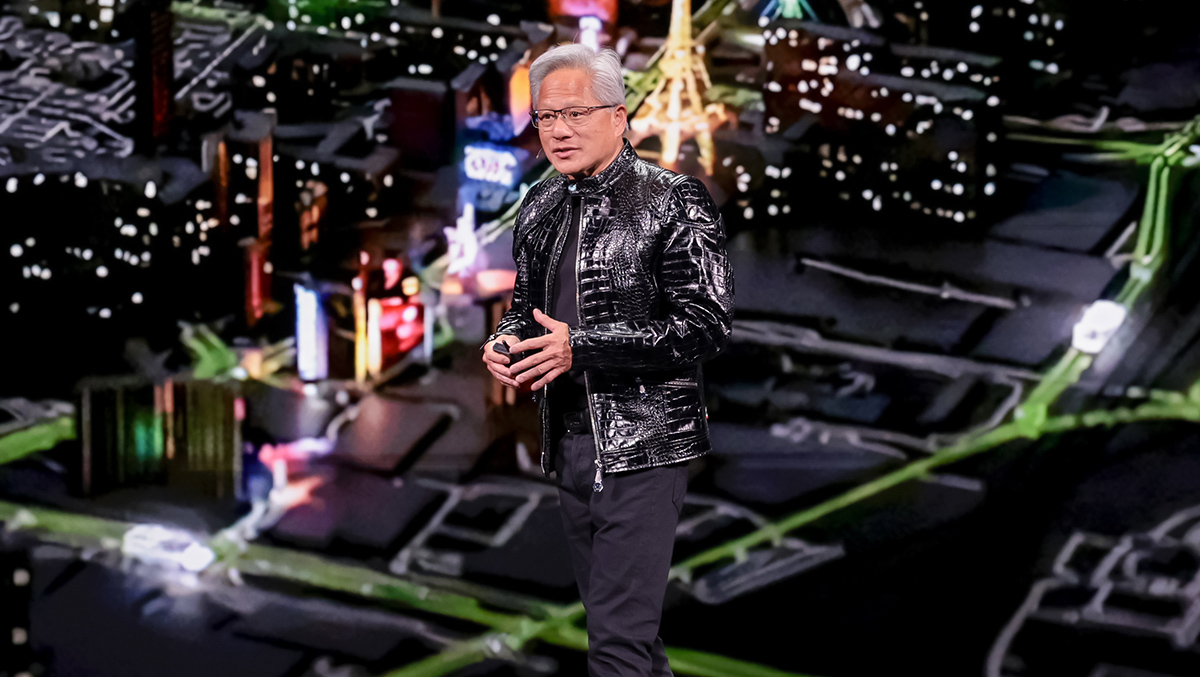
Nvidia (NASDAQ: NVDA) moved higher in the pre-market trading on Tuesday after CEO Jensen Huang used the company’s GTC keynote to deliver a bigger-than-expected view of the AI infrastructure market.
Jensen’s remarks were echoed by the prominent analysts, with Wedbush’s Daniel Ives emphasizing that Nvidia remains at the center of what he sees as a still-accelerating spending cycle.
The vibe at GTC was pretty upbeat, and a big reason for that was Nvidia laying out a much bigger picture of where it’s headed.
The company talked up strong and growing demand for inference workloads, and also gave a more ambitious outlook for its next-gen systems like Blackwell and Vera Rubin.
Nvidia says purchase orders tied to those platforms could reach around $1 trillion by 2027, which is a big jump from its earlier estimate of about $500 billion through 2026.
Nvidia stock: GTC lifts sentiment
The investors responded strongly to the company’s stronger demand commentary, with Nvidia stock closing 1.65% on Monday.
At the center of that response was Huang’s assertion that demand for accelerated computing remains robust across a widening customer base.
Instead of just focusing on training AI models, which has been the big story so far, the company is now putting more emphasis on inference, or what happens after those models are built and actually put to use.
The key idea is simple: running AI at scale could become an even bigger and more consistent revenue stream over time.
And if that plays out, it means Nvidia’s opportunity isn’t just tied to the initial AI boom; it could be much broader and longer-lasting.
Why analysts more bullish now
The analysts were already hoping for more bullish signals from the GTC, with Wedbush saying before the event that Nvidia could deliver a “very bullish” update on enterprise AI demand.
They were also hoping for more clarity around supply conditions and the Vera Rubin launch timeline.
After the keynote on Monday, TipRanks reported that Ives described Nvidia as being “at the top of the AI demand curve for 2026 & beyond.”
He added that the presentation gave the broader tech trade “a much-needed confidence boost.”
For Ives, it wasn’t just about the flashy product announcements. What stood out more was the bigger picture.
Huang pointed out that demand is no longer just coming from the big cloud players.
Now the company is seeing interest from startups, traditional enterprises, and even government-backed or sovereign projects.
In other words, AI investment is no longer concentrated in a few hands; it’s starting to reach a much broader set of buyers, which could keep the momentum going.
The revised forecast also arrives at a moment when investors have been asking whether the surge in AI-related capital spending can hold up into 2026.
The post Why Daniel Ives is getting more bullish on Nvidia after GTC? appeared first on Invezz