








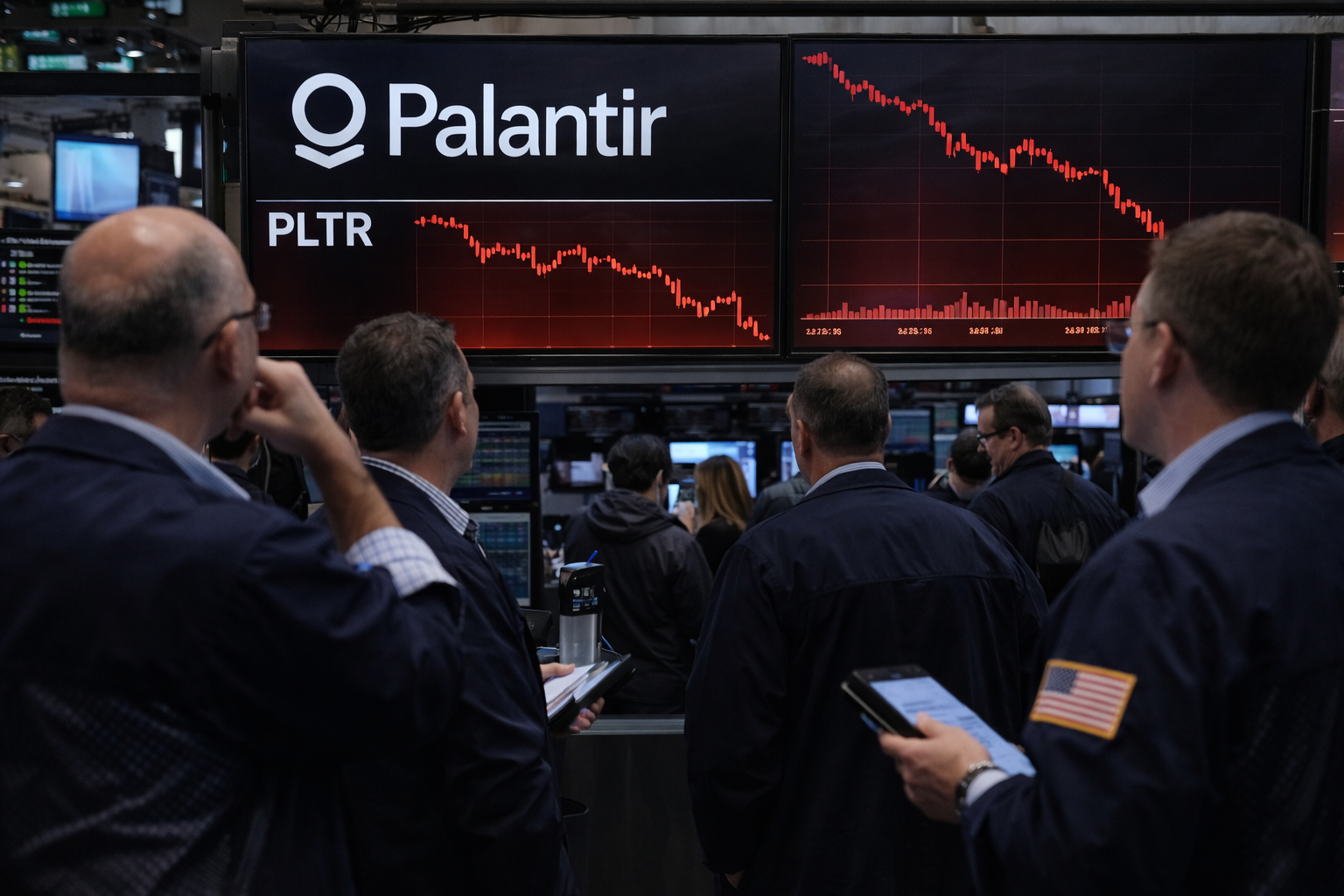
Palantir’s pullback has been swift for a stock that felt untouchable just weeks ago.
Shares closed at $194.17 on Nov. 3, 2025 and is trading at $130.18 on Feb. 23, a drop of about 37%, wiping out a large slice of its late-2025 rally in under two months.
The selloff has split investors into two distinct camps: one calling it a healthy reset in an overextended AI trade, while the other argues that the dip is finally offering a sensible entry into a business still winning government and enterprise work.
Palantir stock: What’s actually driving the selloff
Start with the obvious: Palantir became a high-volatility, high-expectations stock, and those don’t need much to fall.
At Friday’s close, the stock was still priced at a very rich multiple, with a forward P/E of around 217 (in the low-200s).
When valuation is that stretched, even routine market uncertainty can trigger institutional “risk reduction,” where managers trim crowded winners simply to cut exposure.
The macro backdrop hasn’t helped.
Trade policy has re-entered the tape in a big way, with Trump raising the global tariff rate to 15% after the Supreme Court struck down earlier tariffs tied to emergency powers.
Even before the details are fully digested, tariff headlines tend to hit high-beta tech harder because they raise uncertainty around growth, costs, and the broader policy environment.
Then there’s company-specific noise.
Palantir’s decision to relocate its headquarters from Denver to Miami gave the market another reason to debate management’s priorities at a time when the stock was already volatile.
Moves like that can be strategically defensible: taxes, talent, politics, but they also create a short-term “credibility discount” when investors are already on edge.
Also Read: From Palantir to Tesla: why corporates are taking their HQs to Sun Belt
Is the worst over?
The bull case is that this is a reset, not a rerating.
On Feb. 18, Mizuho upgraded Palantir and argued the recent multiple compression looked “unjustifiable,” saying it does not foresee Palantir facing disruption from AI “in the foreseeable future.”
In that framing, the drawdown is simply the market giving investors another shot at a company tied to durable trends, especially AI deployments inside large enterprises and government agencies.
But bears have math on their side.
Even after the drop, Palantir’s valuation remains extreme versus typical software peers, which means the stock can still slide if growth expectations wobble or if markets turn more defensive.
And the skepticism isn’t limited to anonymous traders.
MarketWatch reported Michael Burry has been digging into Palantir’s filings, highlighting that accounts receivable have been rising faster than revenue in many recent quarters.
Palantir can stabilize if tariff-driven volatility fades and if it keeps landing large, visible contracts, but the stock is still priced like perfection, and perfection is hard to deliver quarter after quarter.
The post Why is Palantir stock down 37% from its peak: is worst over for PLTR? appeared first on Invezz