











One year after fires tore through the Los Angeles region, devastation remains etched into the landscape, not only in the thousands of empty lots, but also in the near absence of rebuilding. More than 13,000 homes were destroyed across Los Angeles County; 12 months later, just 28 have been rebuilt.
What should have been a story of recovery instead reveals deeper institutional failure. Despite political urgency, partial regulatory reforms, and repeated promises of speed, reconstruction has stalled under the weight of a collapsing insurance market, regulatory overreach, labor shortages, and soaring construction costs. This slowdown has laid bare the fundamental limitations in California’s institutional capacity to respond effectively to large-scale crises.
County records offer a sobering picture of post-fire reconstruction. As of February 5, 2026, 13,142 parcels had been damaged or destroyed, representing 14,834 housing units. Los Angeles County received 6,116 rebuild applications and issued 2,894 permits, roughly 47 percent of applications. Construction is underway on about 1,420 projects, yet only 16 buildings have reached completion.
Permitting has, to be fair, moved faster in fire zones than elsewhere in California. The average permitting timeline in Los Angeles County’s fire zones is roughly 100 days — far faster than the up to 24 months for comparable projects in the Pacific Palisades outside designated fire areas, and quicker than the roughly eight months typically required in Altadena. Even so, this expedited fire-zone process remains well above the national norm, where permits are issued in about 64 days even absent disaster-related pressures.
California’s past performance offers little comfort that rebuilding will accelerate. In Malibu, only about 40 percent of the 488 homes destroyed in the 2018 Woolsey Fire have been rebuilt, suggesting that time alone does not resolve the state’s underlying constraints.
Under public pressure, lawmakers moved to partially reform the California Environmental Quality Act, a statute that subjects most construction in California to lengthy and expensive environmental review. On June 30, 2025, Governor Gavin Newsom approved Assembly Bill 130 and Senate Bill 131, which capped public hearings, shortened agency review timelines, expanded the Permit Streamlining Act, and introduced a “near-miss” review process. While officials touted these changes as a turning point, their effects remain unclear. Permitting may be faster in fire zones, but high construction costs, persistent administrative friction, and minimal completed rebuilding suggest that procedural reforms have left deeper economic and regulatory barriers largely intact.
The most immediate constraint is insurance — or, more precisely, the lack of it. Many homeowners simply cannot afford to rebuild because they are uninsured or severely underinsured. This is not a mystery, nor is it the result of homeowner negligence alone. For decades, California’s insurance market has been distorted by Proposition 103, passed by voters in 1988. The measure requires insurers to obtain state approval before raising rates and restricts them to using historical data when pricing risk. Insurers are prohibited from accounting for current or future fire risk, climate conditions, or even their own reinsurance costs.
As wildfire damages mounted, particularly after the catastrophic 2017 and 2018 fire seasons, insurers concluded they could no longer operate profitably in the state. The response was predictable. In 2023, seven of California’s twelve largest insurers paused or restricted new policies. In late 2024, months before the fires, companies including State Farm and Allstate canceled thousands of policies or exited high-risk areas altogether, disproportionately affecting communities like the Pacific Palisades and Altadena.
The result is a cruel paradox. The state insists on rebuilding in fire-prone regions while simultaneously preventing insurers from pricing risk honestly. Homeowners are left exposed, reconstruction stalls, and at least 600 property owners have already chosen to sell what remains of their land rather than rebuild.
Even for those with financing, California’s regulatory environment imposes steep costs. The state is estimated to have more than 400,000 regulations, and its building codes are among the strictest in the nation. California’s building regulations routinely exceed national model codes, mandating advanced energy efficiency standards, solar requirements, and green building measures years before they are adopted elsewhere. Much of California falls into high seismic design categories, requiring structural reinforcements that substantially raise construction costs. Accessibility rules under Chapter 11B often go beyond federal ADA standards, increasing design complexity and expense. Layered atop onerous land-use controls and costly environmental review requirements, these rules make rebuilding slower, more expensive, and less accessible, especially for small contractors and middle-income homeowners.
Labor and materials further compound the problem. The US construction sector needs to add an estimated 723,000 workers annually through 2028 just to keep up with existing demand. California’s construction labor market is particularly constrained. Construction employment is heavily regulated through prevailing wage mandates, skilled-and-trained workforce requirements, apprenticeship rules, and stringent Cal/OSHA standards. Combined with immigration restrictions and independent contractor reclassification rules, these policies raise hiring costs and reduce labor supply.
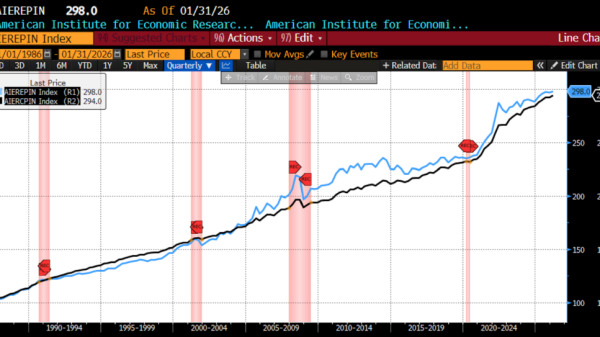
Building material costs have increased across the country, driven by multiple factors and compounded by current trade policy. Roughly seven percent of residential construction inputs are imported. Softwood lumber, the primary material used in homebuilding, is an illustrative example. Canada supplies approximately 85 percent of US softwood lumber imports and nearly a quarter of total domestic supply. Current tariffs of 34.5 percent are up from 14.5 percent last year, pushing costs even higher for builders already stretched thin. As a result, rebuilding in fire-damaged communities becomes not only slower but increasingly unaffordable.
A full year removed from the fires, Los Angeles has learned an uncomfortable lesson: disaster response is only as effective as the institutions that support it. Streamlined hearings and expedited permits cannot overcome a broken insurance market, regulatory overload, labor constraints, and punitive cost structures. Until California confronts these structural barriers head-on, rebuilding will remain slow, expensive, and unequal, and the next fire will likely replay the same grim story.