
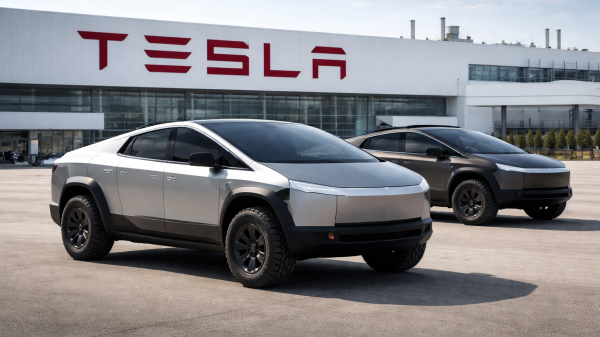

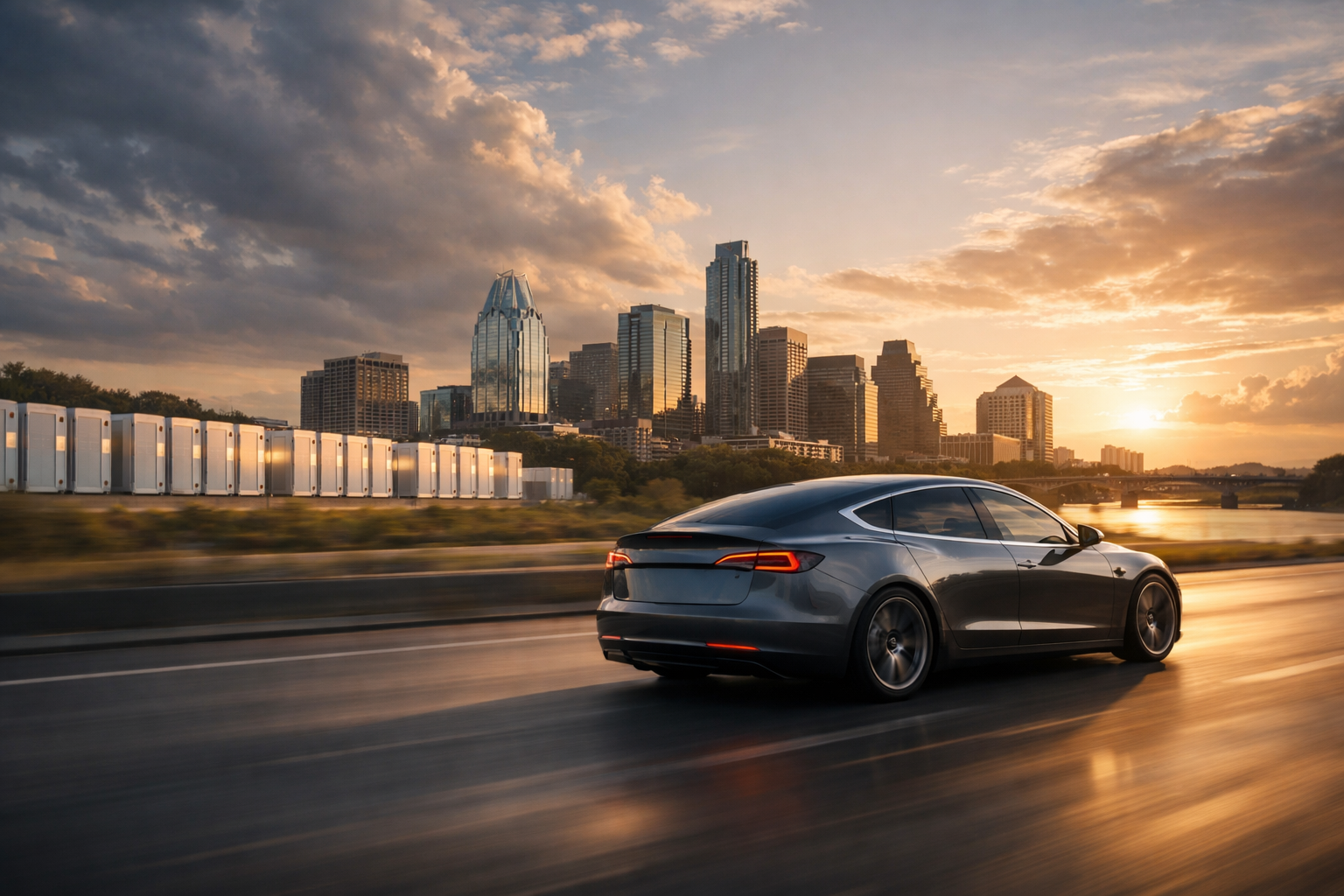
Tesla stock (NASDAQ: TSLA) jumped over 4% on Monday as investors brushed aside soft delivery figures and focused instead on the company’s record energy storage deployments.
The positive sentiment was also backed by Tesla’s accelerating progress in robotaxi testing and Full Self-Driving technology.
The rally, which pushed Tesla stock past $455 per share, extends a broader shift in how Wall Street values the electric vehicle maker, not primarily as a car company, but as an artificial intelligence and autonomy play.
Tesla stock: Why deliveries miss but investors shrug
The headline numbers looked weak.
Tesla reported 418,227 vehicle deliveries in Q4 2025, falling 1% short of analyst consensus at 422,850 and dropping 15.6% year-over-year, the second consecutive annual decline.
The culprit was the September expiration of the $7,500 US EV tax credit, which pulled forward demand into Q3 and left Q4 looking anemic.
But here’s where the market’s reaction tells the real story.
The energy business crushed expectations. Tesla deployed 14.2 gigawatt-hours of battery storage products in Q4, a quarterly record, bringing full-year 2025 energy deployments to 46.7 GWh.
For context, energy business revenue has become increasingly profitable per unit, often generating higher gross margins than automotive sales.
As a diversification lever, the energy division is now serious enough to offset delivery weakness in investor calculations.
This shift in focus matters enormously.
Dan Ives of Wedbush, a prominent Tesla bull, called Q4 deliveries “better than feared” and a “step in the right direction” heading into 2026.
More critically, Stifel maintained its Buy rating and raised its price target to $508, noting that progress on Full Self-Driving and Robotaxi initiatives will be “critical drivers of value over the next 12–18 months.”
Goldman Sachs increased its target to $420, while Benchmark raised its estimate to $475 from $350 following successful robotaxi launches.
The robotaxi and AI case
The real catalyst for Monday’s surge lies in Tesla’s autonomous vehicle progress.
Over the weekend, Elon Musk confirmed that Tesla is now testing robotaxis in Austin without a safety driver in the vehicle, a critical milestone toward fully driverless operation.
The company has already expanded its geofenced robotaxi service area in Austin by 44% and is reportedly prepping Cybercab mass production for April–May 2026.
Wall Street analysts now model Tesla’s value through a “sum-of-the-parts” lens.
Bank of America’s research estimates that robotaxi and Optimus humanoid robotics account for roughly 45% of Tesla’s total valuation, with Full Self-Driving another 17% and Optimus itself 19%.
This means the traditional automotive business, which generated 75% of 2025 revenue, now accounts for only 12% of Tesla’s long-term valuation in bull cases.
Tesla reports fourth-quarter earnings on January 28.
Margins will be critical, including gross profit per vehicle and any colour on energy segment profitability.
But the real test is credibility on robotaxi scaling and FSD reliability.
For a stock trading on AI optionality rather than current earnings, each robotaxi milestone between now and mid-2026 could trigger sharp repricing.
The post Tesla stock surges over 4% today: why TSLA is soaring past expectations appeared first on Invezz